
When you look at a box full of small, grey plastic or metal figures, you might think they're just toys for people who never grew up. Some people look down a little on painting miniatures, comparing it to adult coloring books (and that's on a good day). Sure, at first glance it can sometimes look that way, and there's nothing wrong with that — for thousands of people it's a wonderful pastime and well-earned relaxation after a hard day. But what if this hobby hides something far deeper? What if, beneath the layers of acrylic paint on a surface just a few centimeters across, real fine art is taking place?
In the summer of 2023, the British gallery 20-21 Visual Arts Centre hosted an exhibition called "Art in Miniature." It was the first-ever fantasy miniature exhibition held in a major public art gallery, featuring work from more than 25 international artists. This event officially showed the world what enthusiasts had known for a long time: that painting miniatures and building models has grown into its own distinct art form.
From medieval monks to a three-dimensional canvas
Fascination with creating things on a small scale has followed humanity since time immemorial. The ancient Greeks already decorated their walls with tiny paintings and wore rings or coins with finely engraved portraits. In the Middle Ages, monks decorated manuscript pages with delicate illuminations, using a red lead pigment called "minium" — and it's from this word that the term miniature itself later developed.
Portrait miniatures, painted in watercolor and gouache on thin ivory plates, were enormously popular in Elizabethan England and again in the Romantic era. People wore them in lockets right over their hearts, to keep a memory of their loved ones close. This tradition was only pushed aside by the rise of photography in the mid-19th century — yet the urge to create "in miniature" never disappeared.
Dear devoted painters and everyone around you, pay attention now.
Today's champions of miniature art, such as the Miniature Art Society of Florida (MASF), stress that miniature art is fine art. It demands an incredible level of discipline and precision that only a handful of artists can truly master. The well-known German author and miniature painter Roman Lappat agrees, describing a figure as a three-dimensional canvas on a super-small scale. For him, painting miniatures is a form of meditation and an endless journey toward understanding light, shadow, color, and himself.
Where does craft end and art begin?
Whether painting miniatures counts as true art or is merely an extremely elaborate craft is, of course, debatable, and the question keeps coming up in the hobby community. If we simply color in a pre-sculpted figure by strictly following a guide, we're in territory not unlike the coloring books mentioned earlier. That's not meant as an insult — we ourselves first learned the basics of miniature painting through step-by-step tutorials, and we still consider them an almost indispensable tool, especially for beginners. It was only once we had some basic experience under our belt that we dared to experiment more.

But as many creators point out, the line between art and craft is a very thin one — even a programmer writing elegant code can be seen as an artist.
Traditional "high" art often relies on abstraction, which leaves room for the viewer's own interpretation and inner emotion. Look at Michelangelo's David, and its single-colored stone surface lets your mind wander into abstract thought. A superbly painted miniature, on the other hand — like the winning entries in the prestigious Golden Demon competition — tends to be almost unbelievably realistic and detailed. Our minds then focus more on admiring the painter's incredible technical mastery, and on how they even managed to create such visual effects in such a small space.
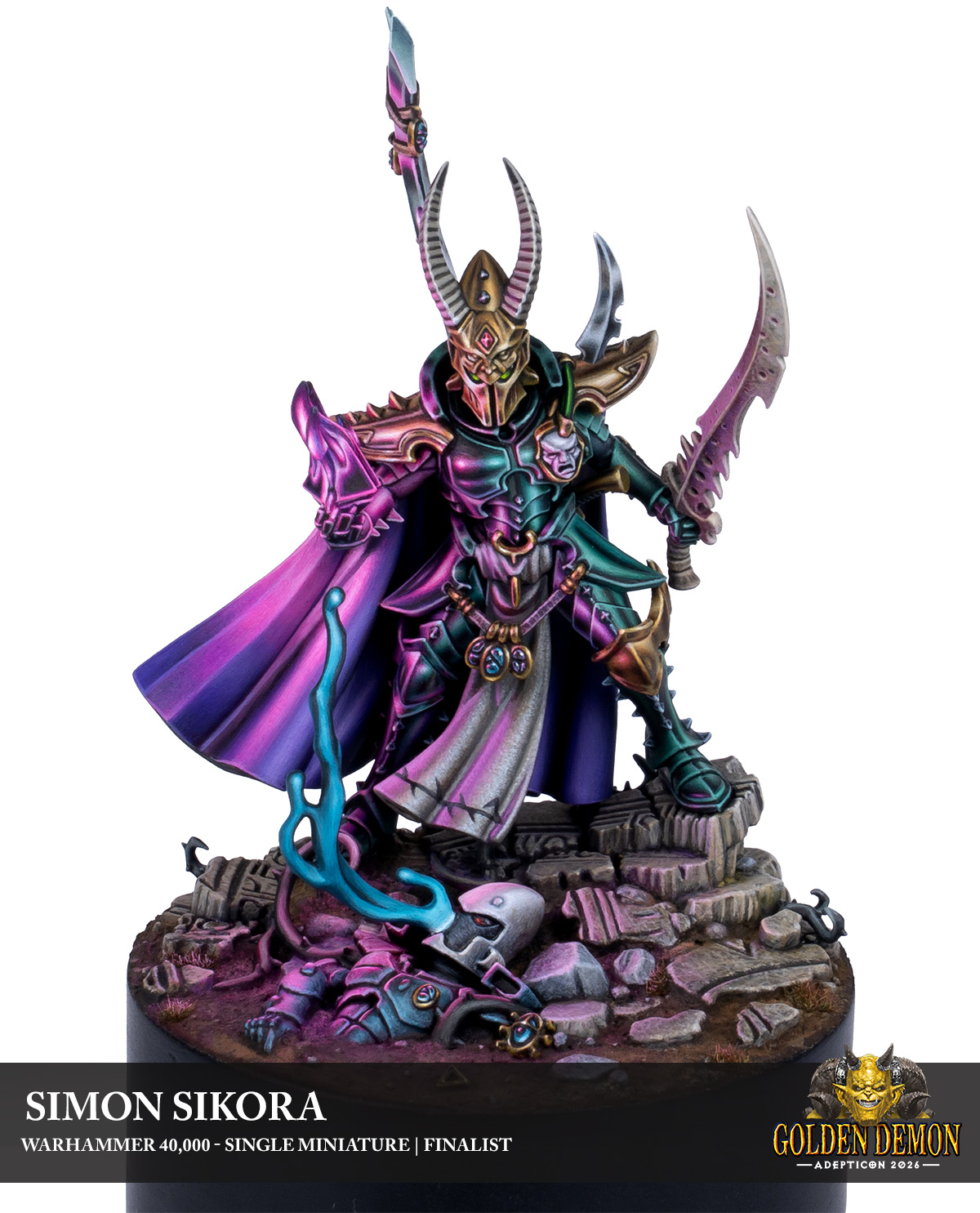
The key to understanding miniature painting as artistic creation lies in the countless conscious creative decisions a painter makes throughout the process.
The creative decisions that make it art
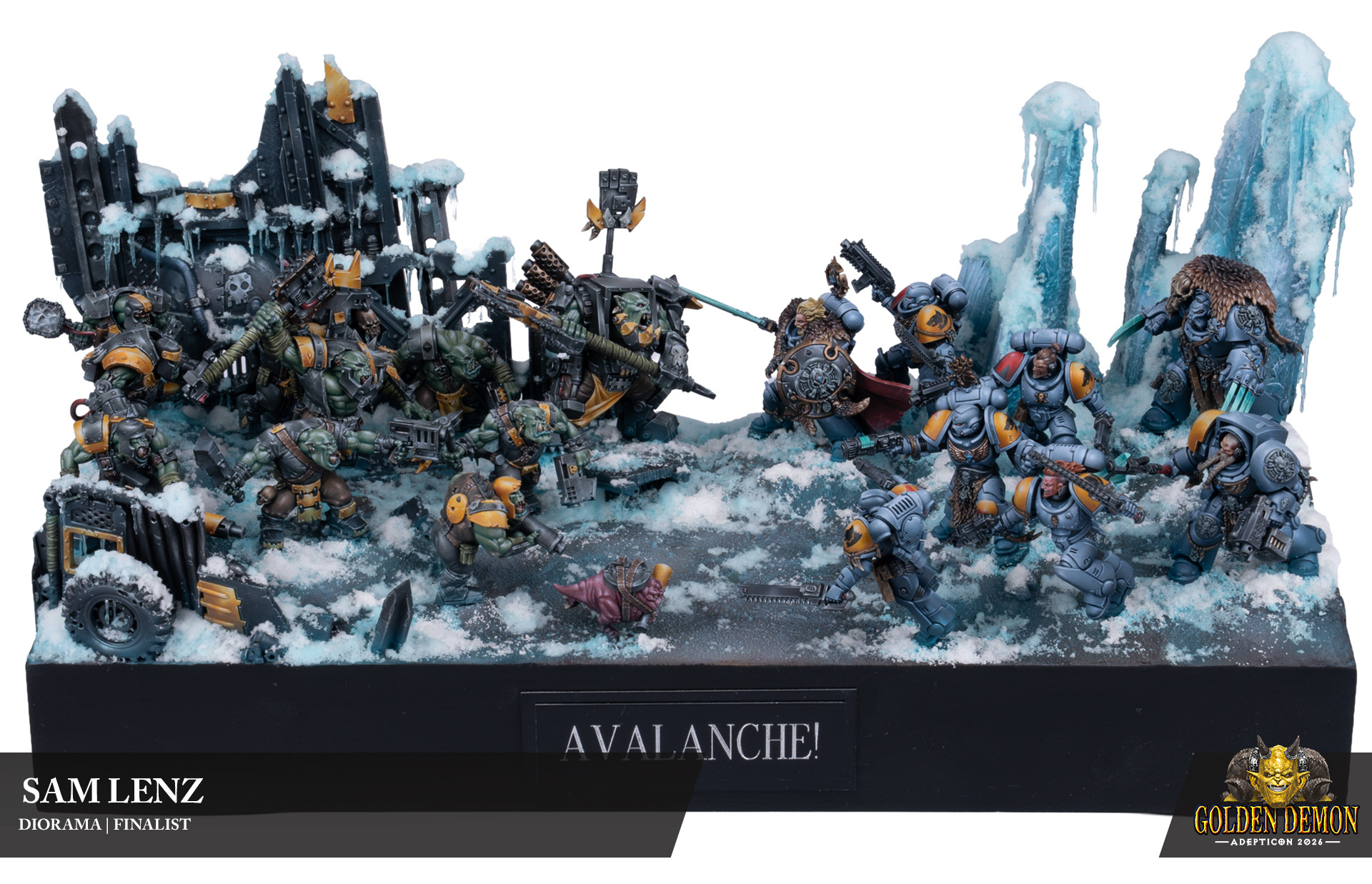
In quality miniature painting, a person isn't just deciding which color to put on which part of the figure. They become a director, a lighting designer, and a storyteller, all on a surface of just a few square centimeters. Along the way, a painter makes a whole series of complex decisions:
Color palette
Choosing colors that work together and jointly create a specific psychological effect or the desired mood.
Light, shadow, and contrast
Simulating the way real light falls. The painter has to decide where an imaginary light source is coming from (say, the glow of a lantern or a magic sword), and paint both the shadows and the brightest highlights by hand.
How details are picked out
Using techniques like shading, hatching, or stippling (pointillism), which under a magnifying glass reveal themselves as tiny individual brushstrokes of artistry.
Materials and how they look
The art of convincing the human eye that a piece of grey plastic is actually rusted metal, damp human skin, polished leather, or glossy silk.
Atmosphere
Setting the overall tone — from bright, heroic colors all the way to a dark, oppressive, grimy style (the so-called "grimdark" look).
Composition and visual storytelling
Arranging a figure so that it tells a story. Many artists build complex, multi-layered dioramas from various parts to capture a dramatic moment, or even construct an entire city or battlefield.
Pose and model modifications (conversions)
Bending, cutting, and combining different models together (so-called "kit-bashing") to create a completely unique pose and character that never existed before.
The base and its relationship to the figure (basing)
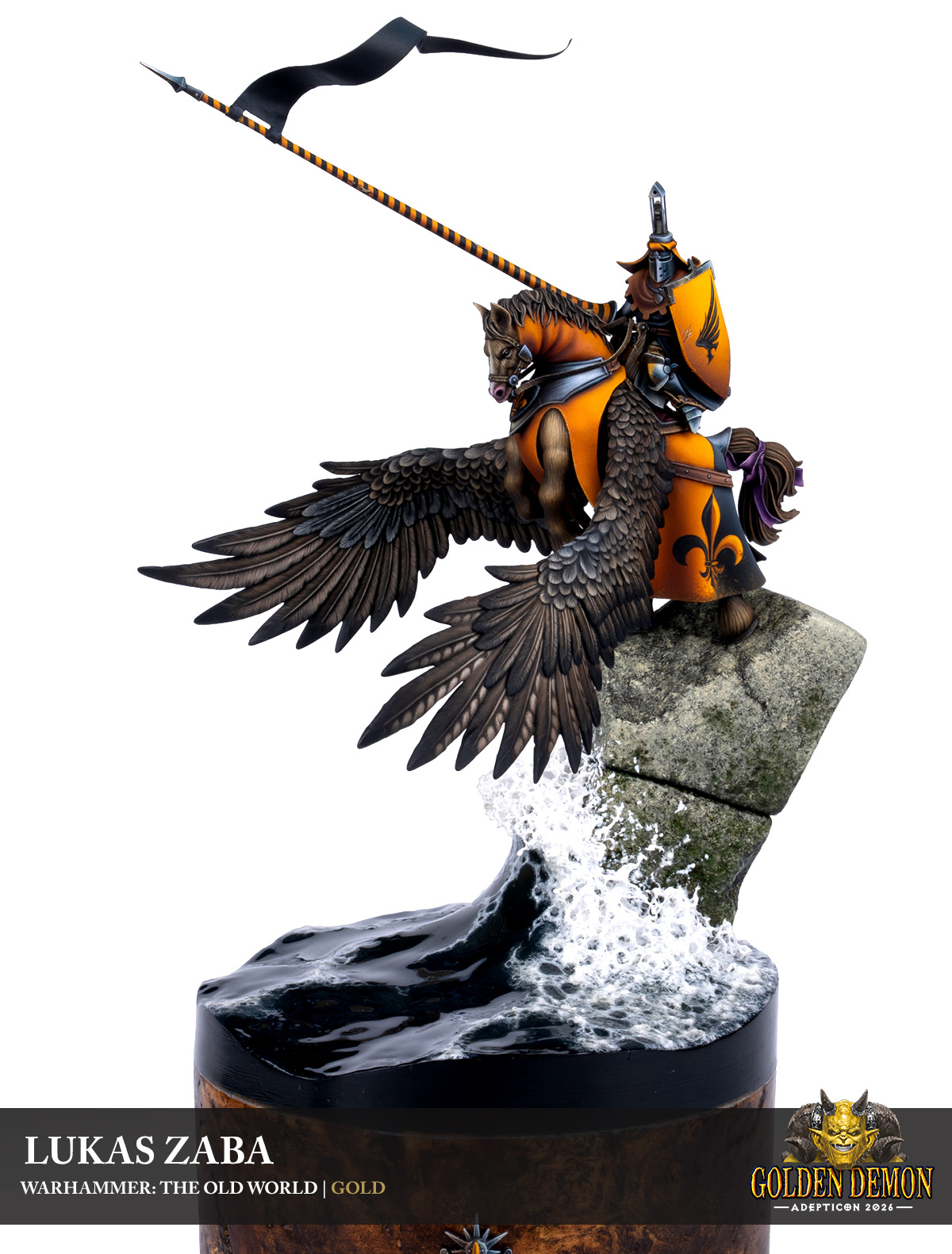
The base isn't just some necessity to keep the model from falling over. It's a scene — a swamp, a temple's marble floor, or an alien desert — that gives the figure context and completes the overall impression.
It's precisely these complex creative decisions that elevate painting figures into a legitimate form of artistic expression. Every painter brings their own taste, style, experience, and sense of color into their work.
Wow, Flow, and Glow
Painting miniatures isn't just a visual pursuit — it also has a huge impact on our mental health and wellbeing. According to scientific theories of play and experience, painters move through three main phases:
The moment of excitement and inspiration when we first see a new model, imagine its potential, and start planning the project.
A state of deep immersion in the act of creation itself, where we forget about the world around us and our everyday worries, and merge with the activity we're doing.
The feeling of pride and inner satisfaction from a finished piece, to which we've given a soul and a personality once it was just grey plastic.
The Flow phase is worth exploring further. This psychological concept was described by the Hungarian-American psychologist Mihaly Csikszentmihalyi as a state in which a person becomes completely absorbed in an activity, forgetting the world around them and their everyday worries, merging fully with what they're doing. For a great many people, this focus on the tip of the brush is the best cure for stress, and a form of mindfulness.
And it's precisely the Glow phase — that feeling of pride and inner satisfaction in a finished piece — that keeps drawing us back to the hobby, again and again. If this particular topic speaks to you, take a look at our article comparing miniature painting to a kind of therapy.
Anyone can be an artist
There's no need to jump straight to declaring that every painted miniature from a board game or wargaming system is a masterpiece worthy of a national gallery. For plenty of people, it will always simply be an enjoyable hobby — a great way to clear your head and get your figures ready for the gaming table. And that's completely fine.
But if we look at miniature painting without prejudice, we find that it removes barriers that people often feel toward traditional art. As one of the exhibitors at the fantasy miniature gallery show put it: this art form shows people that they don't need to fear any barriers, and that any one of us can be an artist.
We'd also recommend checking out and drawing some inspiration from a few of the Czech Republic's leading miniature painters, such as:
Next time you pick up a brush, or spot someone hunched over a tiny figure under a desk lamp, remember this: what's in their hand isn't just a toy, but the key to a small, fantastical world that comes alive through their own imagination.
Key takeaways
Painting miniatures can be relaxation and a genuine art form at the same time — one doesn't rule out the other.
What makes it art isn't the material or the size, but the countless conscious creative decisions behind it: color, light, atmosphere, composition, conversions, and basing.
And whether you're painting for a gallery or just for fun and the gaming table, the three phases of Wow – Flow – Glow make it one of the best ways there is to clear your head.
Want to discover the artist in you? Drop by our shop in Plzeň at Zbrojnická 116/2, open Mon–Fri 1pm–6pm — we'll help you pick out your first paints, brushes, and miniatures. Also check out our Adeptus FAQticus.
obchod@coloursofwarriors.com · +420 737 281 727