
We live in an age of endless scrolling and notifications that pull us apart several times an hour. And it's precisely in this era that one of the most effective remedies turns out, paradoxically, to be something almost forty years old: sitting down at a table, picking up a brush, and spending an hour or two on a piece of grey plastic. To an outsider, it looks like "playing with toy soldiers." To leisure psychologists, it's an increasingly interesting case study in how the human mind can help itself. Reading through this study, we found ourselves getting more and more pleased, because the science here suggests there really is something more behind miniature painting than just the joy of creating.
A study that takes it seriously
This isn't just the impression of enthusiastic hobbyists. In 2025, the respected academic journal Religions published a study by Dr. Tara B. M. Smith of the University of Sydney, who spent six months following fourteen active Warhammer 40,000 painters. She tracked them through interviews and journal entries, asking one specific question: do these people enter a state of "flow" while painting miniatures — and if so, what does it do to them?
The result wasn't exactly a shocking revelation for anyone who's ever spent an evening at a paint palette — but it was nice to finally see it in black and white. According to the study, painting miniatures really does function as a deep, meditative practice that can piece scattered attention back together. Not through boredom, but through focused, physically grounded work of the hands.
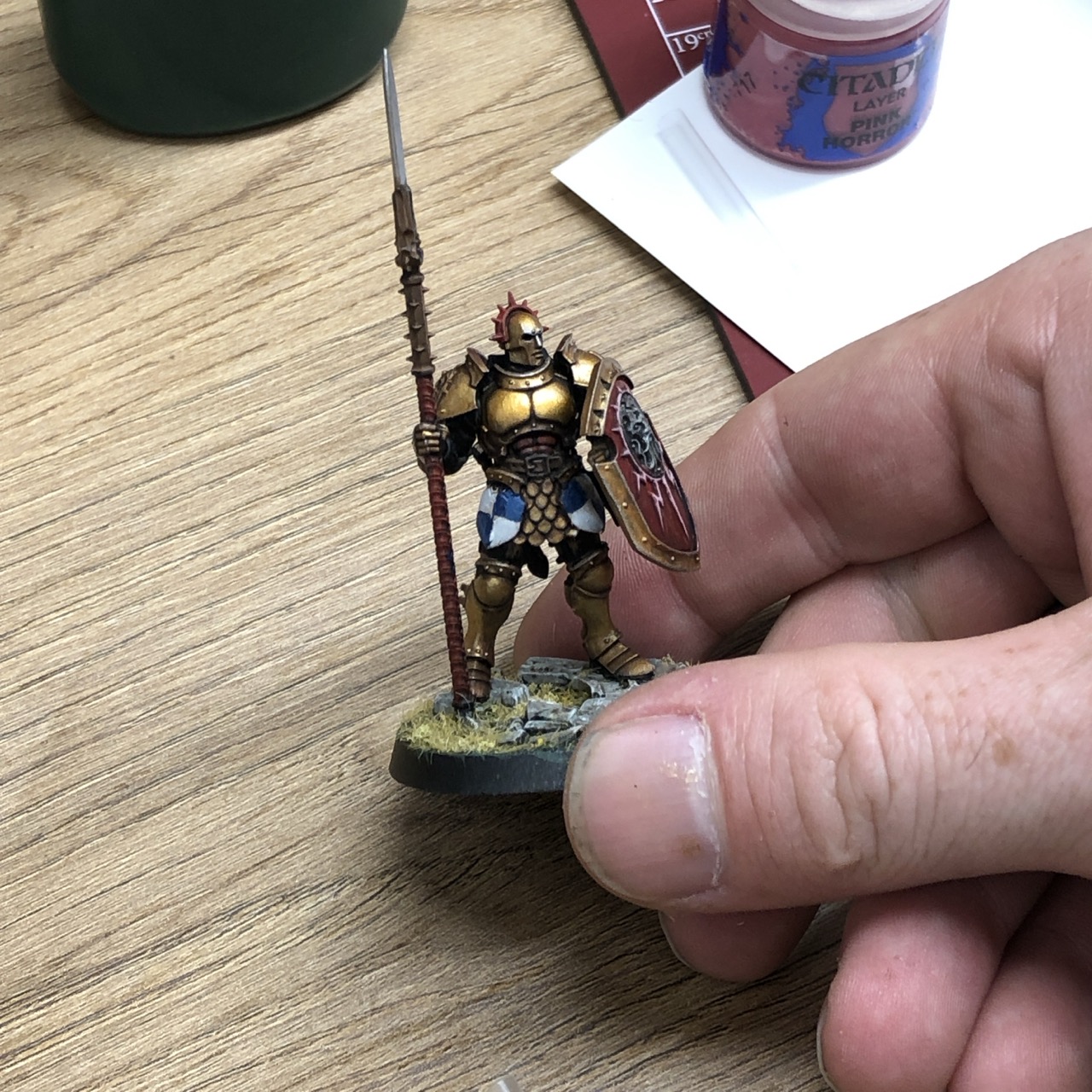
The zone where time stops
The central concept of the whole study is the state of "flow" — a concept described by psychologist Mihaly Csikszentmihalyi as total immersion in an activity, during which a person loses track of both themselves and the time passing around them. In a society obsessed with measuring productivity, that's a rare luxury. For a while, the brain stops monitoring stressors and social pressures, and time stops feeling like a straight line, becoming instead something slippery and indistinct.
One study participant described this in an almost comical way. One evening around ten, after his partner had gone to bed, he sat down to do "just one more detail" — a little tired, thinking it would take five minutes. The next time he looked up from the model, it was two in the morning.
Several other people in the study described a similar experience — as if, in this state, time turns into a bubble, separate from ordinary life, in which you finally don't have to pay attention to anything except what's happening right in front of you, at the tip of the brush.
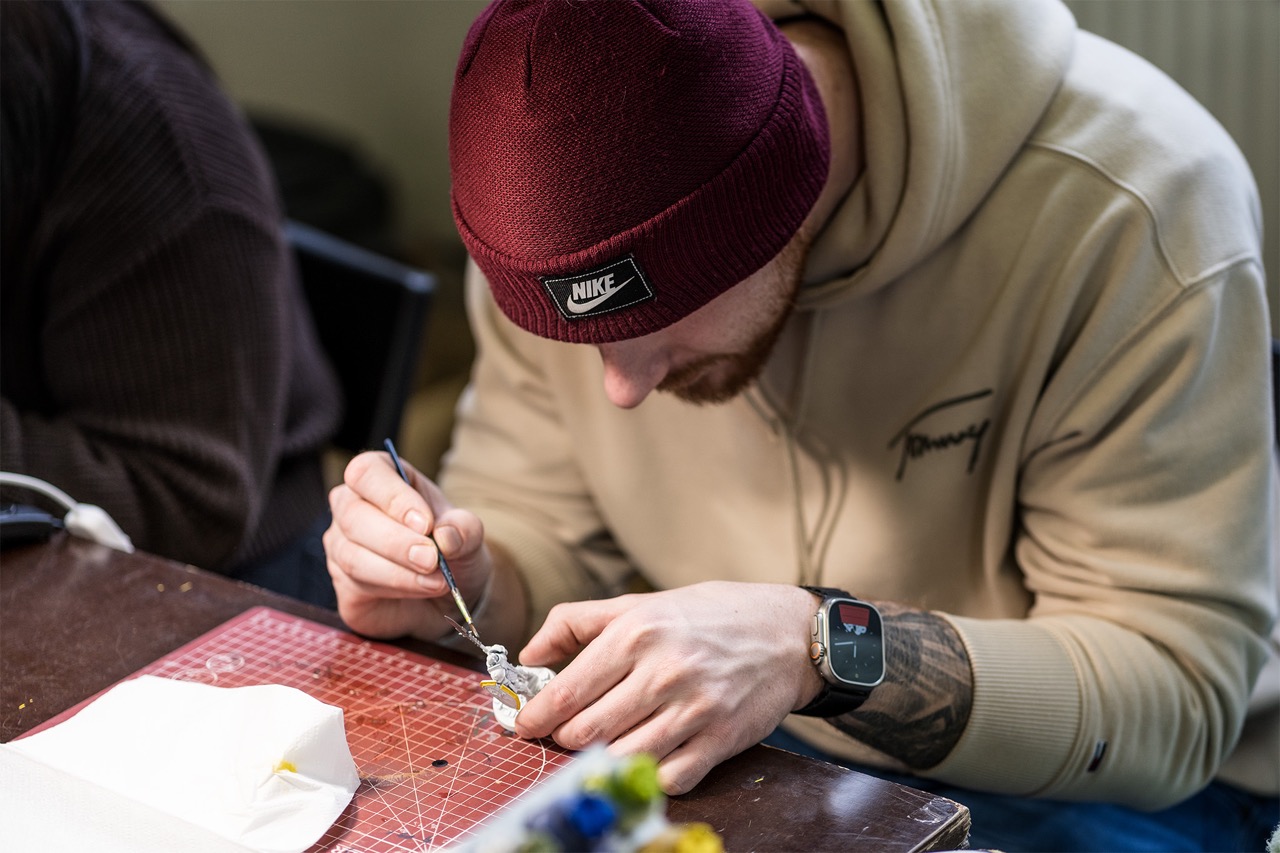
Just your hands and a brush
From the perspective of so-called embodied cognition (a strand of psychology that studies how much our thinking depends on the physical body and its movements), painting miniatures is a fascinating process. The brush and the model, in that moment, become almost an extension of the nervous system. One participant described the ritual that precedes the flow state: methodically wetting the brush, wiping it against a leg (personally, we recommend sweatpants), checking the tip — a small sequence of movements that primes the body for what's about to come.
Unlike the "weightlessness" often used to describe digital entertainment, the painters described more of a sense of heaviness — a kind of hyper-awareness of their own body, completely still, while only the fine muscles of the hand are at work. And this physical presence creates a crucial contrast with the digital world: digital achievement only exists for as long as the screen is on, while a painted model is tangible proof that you created something — it stays on the shelf long after the computer has gone to sleep.
An uplifting challenge
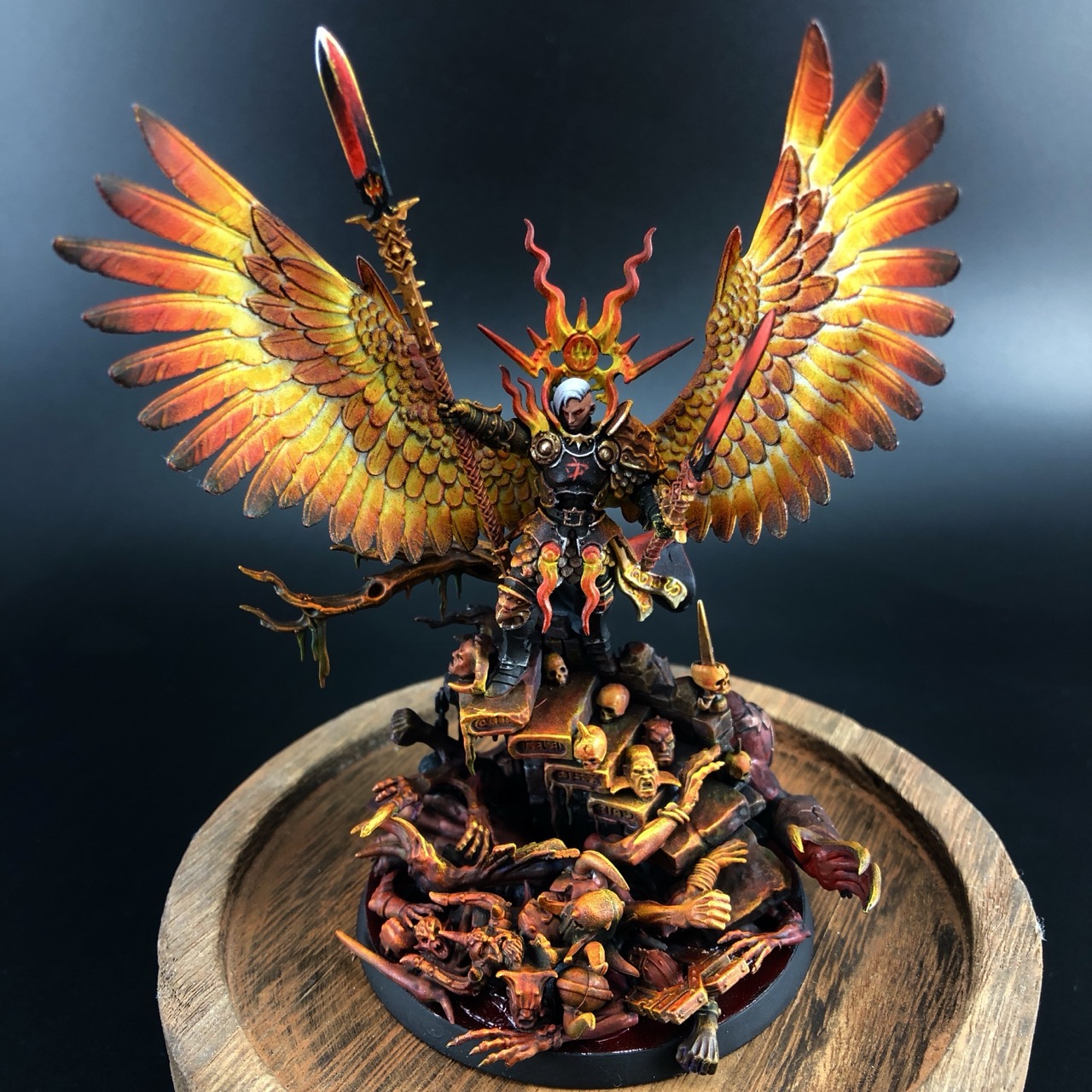
For a state of flow to occur at all, you need a balance between skill and the difficulty of the task at hand. And here Warhammer is almost suspiciously well designed — it offers a genuinely endless amount of room to grow. First you learn basic layering, then comes NMM (non-metallic metal — imitating a metallic sheen without using a single metallic paint) or OSL (object source lighting — simulating light radiating directly from the model itself, say from a weapon or a rune).
Whereas at work, stress tends to be destructive, here it works exactly the opposite way. One participant noted that without these new goals, he would feel stagnant in the hobby and would get bored. Voluntarily pushing through technical obstacles becomes a safe training ground — instead of anxiety, it brings satisfaction, and confidence that carries over well beyond the painting desk.
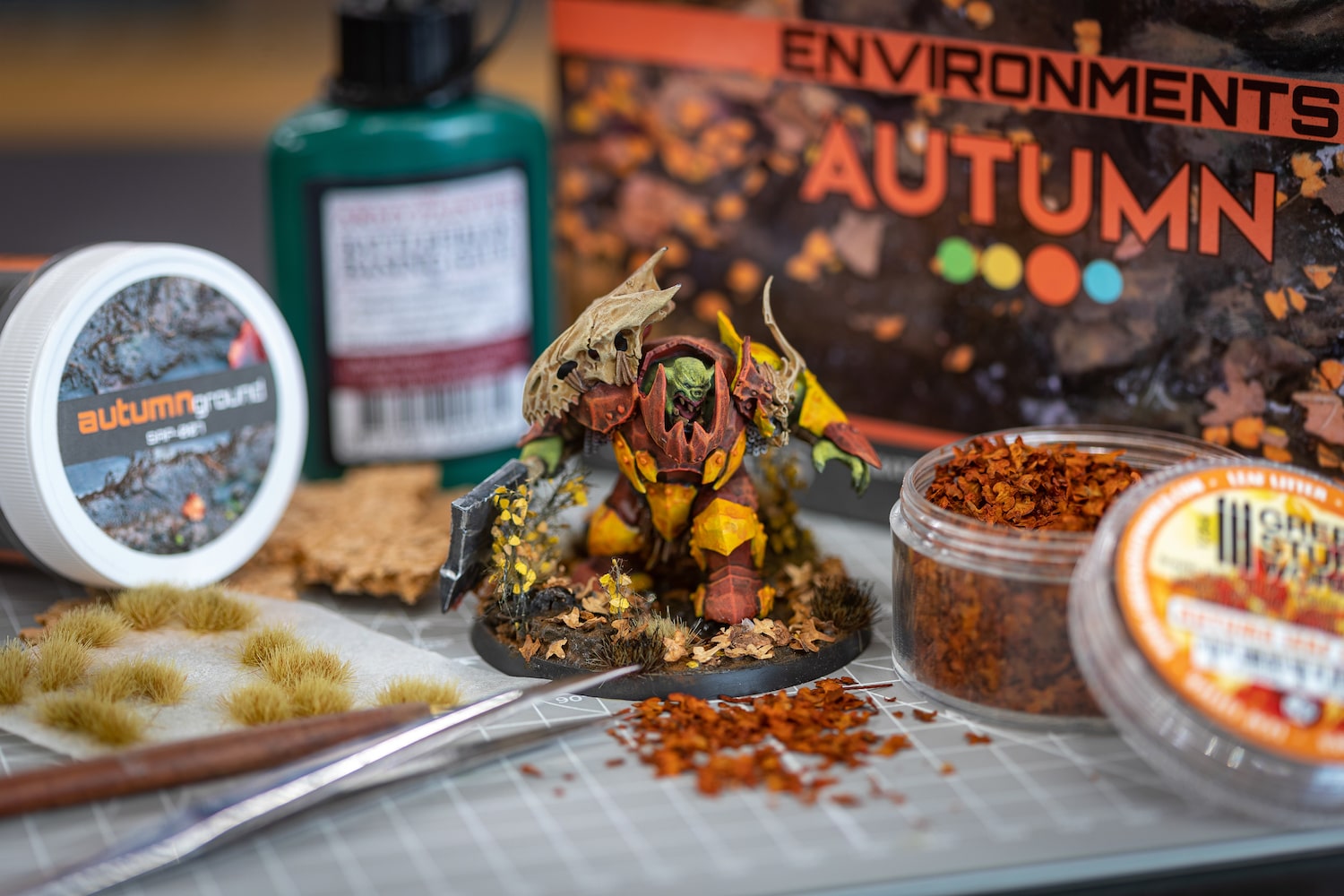
Therapy in a paint pot
This might be the most powerful part of the entire study. According to the research, painting miniatures functions as an effective form of art therapy, one that can even quiet physical pain — one participant reported completely forgetting about his chronic back pain while focused on a model's details. For people struggling with anxiety or depression, it offers a safe harbor where — unlike in most of everyday life — they have full control over both the process and the outcome.
The dark side of "plastic crack"
Like any honest piece of research, this one has its balanced flip side too. A critic named Braxton Soderman, in his book Against Flow, points out that companies can deliberately exploit the flow state to build dependency — and the Warhammer community even has its own slang term for it: "plastic crack," referring to the constant urge to buy more, which leads to stacks of unopened boxes, the so-called pile of shame.
Soderman goes even further, arguing that flow can function as a kind of sedative — a way for modern people to put up with uncomfortable circumstances in their lives without ever actually trying to change them. Within Warhammer, though, this risk of isolation is clearly offset by a strong community. For many of the study's participants — including one who finally made friends through the hobby — it turned into exactly the opposite path: not away from people, but toward them.
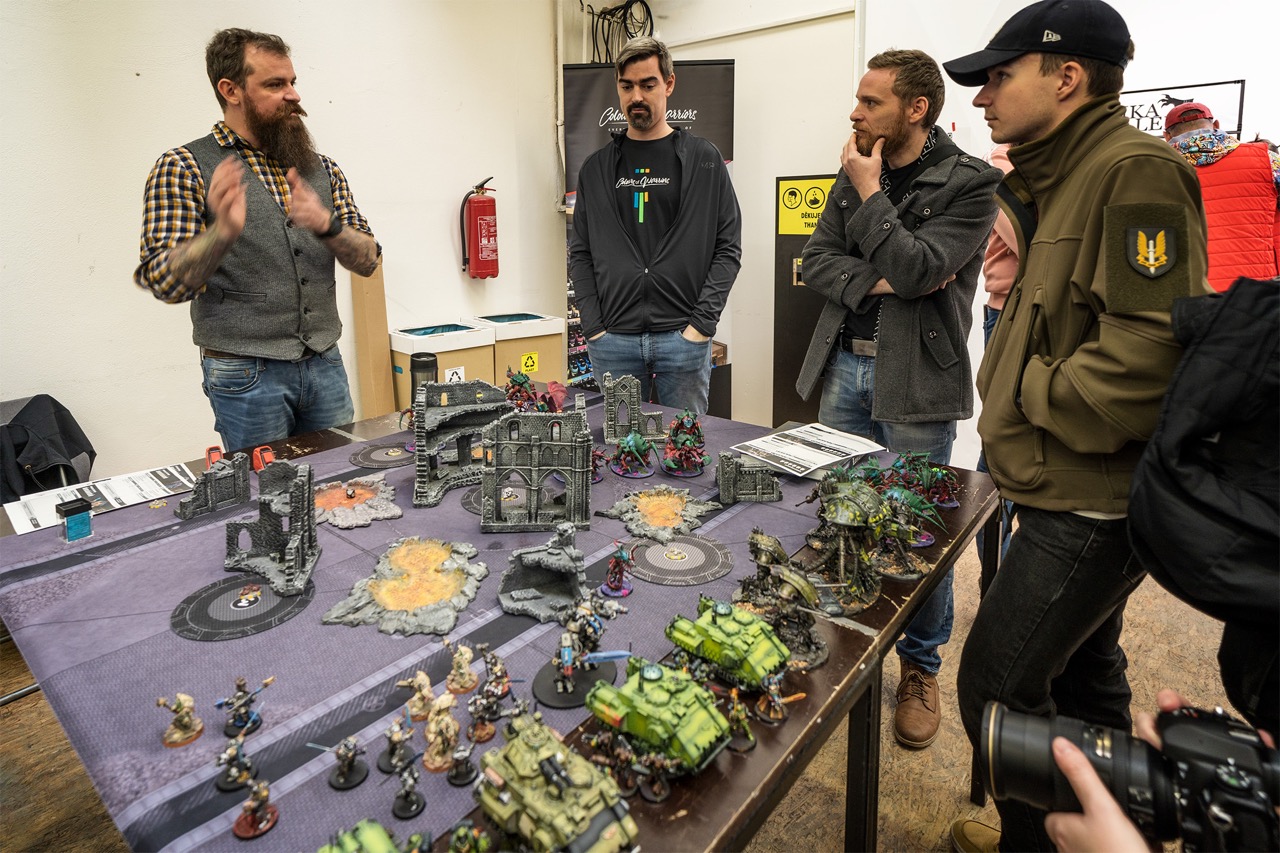
A spiritual dimension: satire that gives rise to faith
Since the study was published in the journal Religions, it's no great surprise that it included a chapter on the hobby's spiritual dimension. We found it just as interesting, though, since it shows how miniature painting can seep into all sorts of corners of a person's life.
And no, it's not about worshipping the Chaos gods in real life.
One of the study's most surprising findings concerned the hobby's religious dimension. One participant, a practicing Mormon, uses his miniatures as part of his own search for meaning. He compares working with the plastic to, quite literally, "organizing matter" — something that reminds him of how, according to his faith, God organized and created the universe.
Especially striking is his description of what he himself calls "satirizing the satire": Warhammer 40,000 is, at its core, a satire of religious dogmatism and fanaticism, drawing on Catholic and Anglican iconography among other things. Yet he layers Mormon symbolism onto it — using a game that pokes fun at religious power structures to, paradoxically, explore and express his own genuine faith.
A lesson from a small world for a big life
The study demonstrates something plenty of hobbyists have long suspected, just without a scientific stamp of approval on it: at the quiet painting desk, there's a calm to be found that the digital world often denies us. It isn't just a game. It's a tool for mental hygiene, one that lets us disconnect for a while so we can reconnect with ourselves. Through focused work of the hands, the mind returns to the present moment, where the problems of the world shrink, for a few hours, down to the scale of a few dozen millimeters.
A question to leave you with
Do you have an activity of your own that lets you step out of the constant rush, and through creative work, find your own inner balance again?
If not — maybe it's time to try seeing the world through the lens of slow, focused work. Sometimes all it takes is one brush, one miniature, and an evening with your phone out of reach. See for yourself what it does to you.
Sources:
- Smith, Tara B. M. (2025). "Miniature Mindfulness: Finding Spiritual Flow with Warhammer 40,000 Models." Religions, 16(2), 121.
- Soderman, Braxton (2021). Against Flow. MIT Press.
Want to try this sense of calm for yourself? Drop by our shop in Plzeň at Zbrojnická 116/2, open Mon–Fri 1pm–6pm — we'll help you pick out your first miniature and paints.
obchod@coloursofwarriors.com · +420 737 281 727